
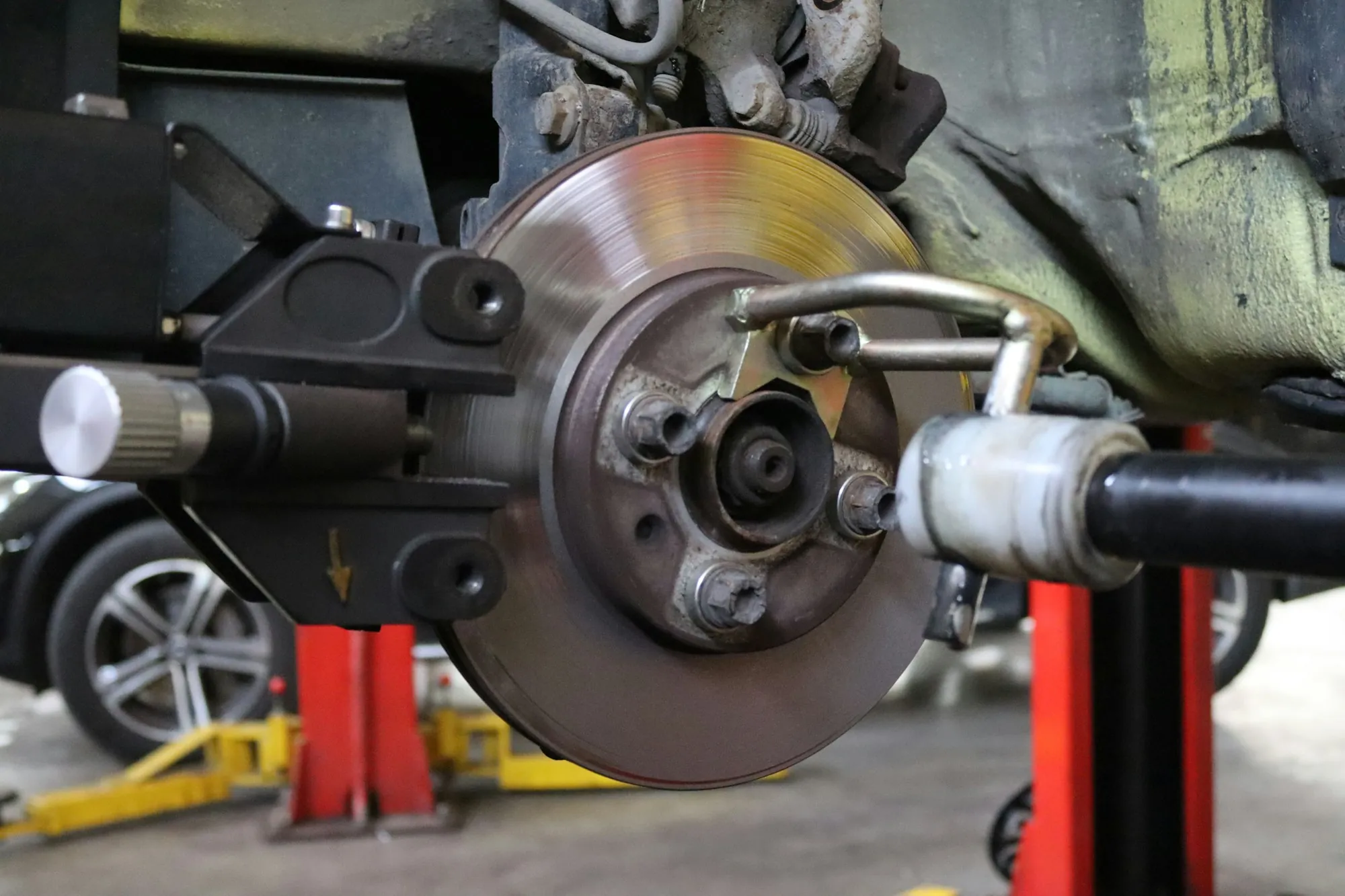
Brake Repair in Nederland for Canyon and Mountain Driving
Pads, rotors, calipers and fluid checked against the heat of Boulder Canyon descents, then repaired with parts that suit how you drive.
Tell us how the brakes feel — (303) 951-7564Mountain Descents Ask a Lot of Your Brakes
Coming down Boulder Canyon or the Peak to Peak Highway, your brakes turn speed into heat over and over again. Pads harden, rotors distort and tired fluid starts to boil, which is why a vehicle driven here can need brake work sooner than the same model driven on the plains.
We start by finding out what is actually worn. Pads and rotors are measured at every wheel, calipers are checked for sticking slides and the fluid is tested for moisture. The findings come with your options and a price for each, so you decide what gets done.
If the problem is a pull or a pulse rather than plain wear, we trace it to the caliper, hose, rotor or suspension part behind it instead of replacing pads and hoping.
Signs Your Brakes Need Attention
- Squealing that stays after the first few stops of the day
- Grinding or scraping when you press the pedal
- A pedal that pulses on long downhill stretches
- A soft or sinking pedal
- Pulling to one side under braking
- A brake or ABS warning light
What We Check
Pad thickness
Measured at every wheel so you know exactly how much life is left on each axle.
Rotor condition
Thickness, runout and surface checked to decide whether resurfacing is possible.
Calipers and slides
Checked for sticking that causes uneven wear, pulling and overheating.
Brake fluid
Tested for moisture, which lowers the boiling point on long descents.
Lines and hoses
Inspected for rust, leaks and swelling that can make the pedal soft.
ABS system
Scanned and tested when the warning light is on.
Your Brake Repair Options
Worth Mentioning When You Call
A few details help us plan the inspection and have the right parts in mind.
- Whether the noise happens only on hills or on every stop
- If the pedal feels different hot versus cold
- Roughly when the pads were last replaced
- Whether you tow a trailer or haul heavy loads
- Any warning light on the dash
How the Visit Works
Describe and book
Tell us what the brakes are doing and book a time; the inspection is free.
Measure and explain
We measure everything, then call with what is worn, your options and the prices.
Repair and test
The work you choose is done and the vehicle is road tested on a grade before pickup.
Stop Wondering About Your Brakes
Call and describe what you feel or hear. We will measure everything and tell you your options before any work begins.
Book a brake check — (303) 951-7564