
Check Engine Light Diagnostics in Nederland
Find out what the light really means, with the cause confirmed by testing, including the faults that only show up on a long climb.
Ask about your warning light — (303) 951-7564A Code Points the Way. Testing Finds the Answer.
Behind every amber engine light sits a stored code, and that code identifies a system rather than a specific part. A lean condition might trace back to an intake leak, a tired pump, a contaminated airflow sensor or broken wiring, and replacing the wrong one wastes money without fixing anything.
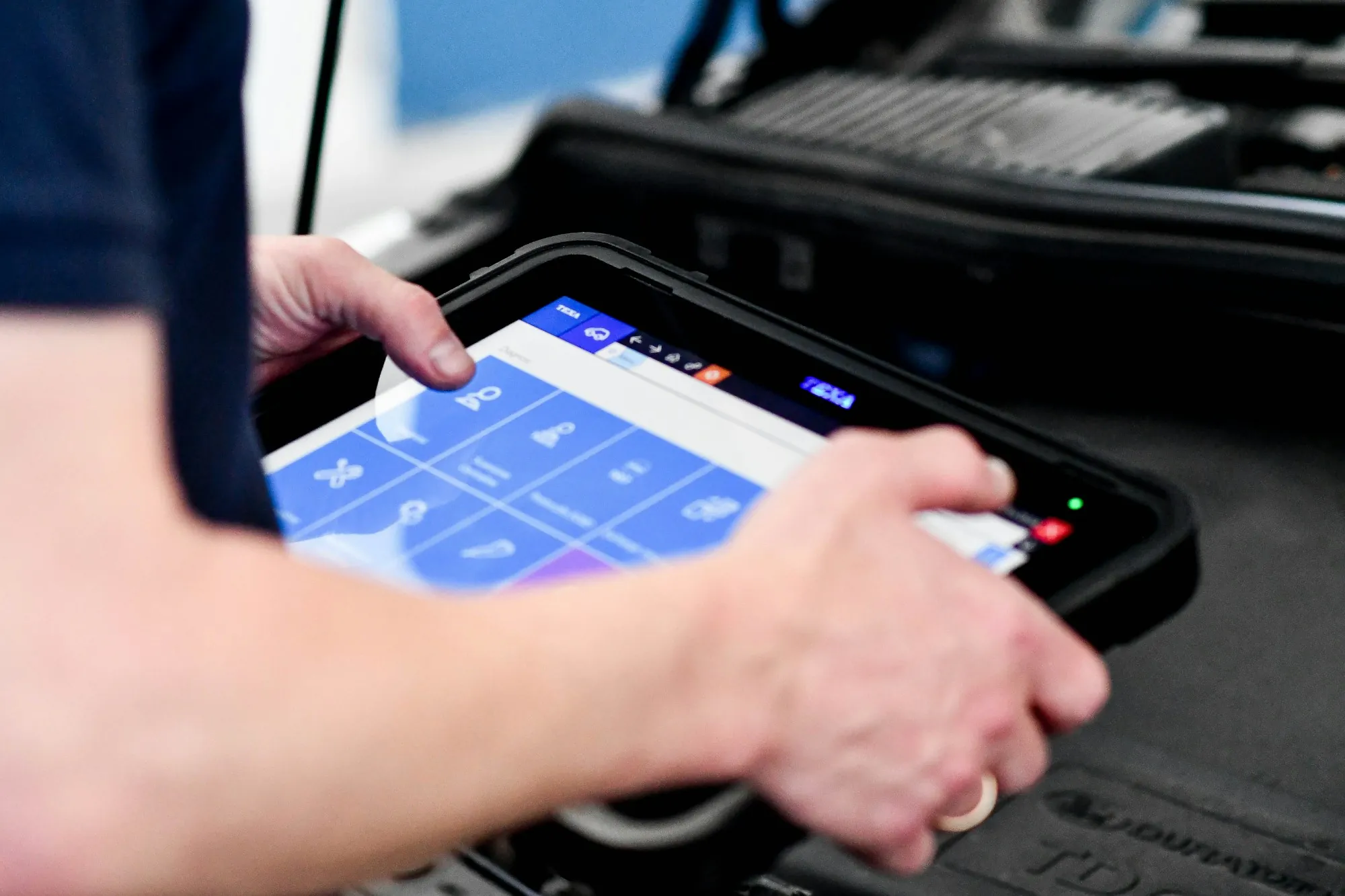
We read every stored and pending code, pull the snapshot the computer saved at the instant of the fault, and watch live sensor readings on a drive. Then we run targeted tests, from smoke testing for leaks to fuel pressure and ignition checks, until one cause accounts for everything.
Up here the air is thin, mixtures shift, and certain faults surface only on a frosty start or halfway up the canyon. If yours is intermittent, tell us when it happens and we will test in those conditions.
When to Have the Light Checked
- The light is on and stays on
- The light flashes
- The engine idles rough or hesitates
- Fuel economy has dropped noticeably
- The vehicle failed an emissions readiness check
- A code keeps coming back after being cleared
What We Check
All stored codes
Engine, transmission and body modules scanned for current, pending and history codes.
Freeze-frame data
The engine conditions when the fault set, which narrows the search.
Live sensor readings
Oxygen sensors, fuel trims and airflow watched on a drive.
Leaks
Smoke testing to find vacuum and evaporative leaks precisely.
Fuel and ignition
Fuel pressure, injectors, coils and plugs tested individually.
Wiring
Voltage and ground checks on the circuit behind the code.
What Happens After Diagnosis
Details That Speed Up the Diagnosis
The more you can tell us, the faster the testing narrows down.
- Whether the light is steady or flashing
- When it first came on and what you were doing
- Any change in power, idle or fuel economy
- Recent work such as a fill-up, a battery or a repair
- Any code numbers a parts store gave you
How the Visit Works
Describe the symptom
Tell us if the light is steady or flashing and how the engine behaves.
Test to a conclusion
We scan, watch the data and run tests until the cause is confirmed.
Explain and repair
You hear the cause and the price, and approve the repair before we do it.
Get the Light Explained
Call and tell us what the dash shows. We will explain how the testing works and book the vehicle in.
Book a diagnosis — (303) 951-7564